Smoking a Cigarette with a Morning Coffee

It is possible that the outward changes that were so distracting, the obvious racing heart, the baited waiting Christmas morning beckoning in every unmet wearer of a skirt, were accompanied by others, ones that weren’t so spectacular. Or maybe it’s just time and the way our minds break like old shoes to accomodate the flex and flow of the memories heaving across the crust of our brains like the brutal sublimating, freezing, and thawing creeping waters of a permafrost in spring that finally makes the indelible mark of memory so obvious to its bearer. Maybe there was no special new change in neurology then, when, unbidden, the prizes on offer in life were bigger and the falls from heights and climbs became steeper at or about age 13. Something happens, though. Our living ghosts start to haunt us. Our living pasts heave into view as animate scenes, not dioramas, and edge out the immediate at times, or chug right alongside.

We must grow eyes in the sides and backs of our minds, under our scalps and headbones. We begin to notice the past as alive and present and indelible, and all forward motion as a trend of variety in a massive stillness.

I quit smoking cigarettes two years ago. I loved the sharp-edged contours of the world when I took a drag in the morning with the cup of coffee I needed to jump my body into action after the cigarettes and the booze and the coffee and the reading and the classes and the writing I had taken too much of the day before. I loved the burn of the smoke in my lungs, I loved the little tobacco plant I had planted in my chest with all that smoke- the little vaprous tobacco plant that sat in my body yearning for me to give it a spectral, weightless, filmy body of smoke to call its own as long as my butt stayed lighted. I quit smoking two years ago, though the memory of that smoke and the coffee and the mornings then are present and occurring even now.

I loved to sit outside my window on the fire escape alone in the morning, smoking. With the weird strength of all memories crowding into my present, when I need it most, I still am.

Technorati Tags: ,

Sadamitsu the Destroyer: Come in Space Pajamas, or Don’t Come at All.

Ride a bikemonster or don't ride at all.

A week or so ago I Netflixed an animated series I had started watching halfway through its original TV run when I was living in Japan, “Sadamitsu: The Destroyer“. You got your basic rowdy gang of lovable Japanese teen toughs, led by the quick-tempered, never-say-die, brawling Tsubaki Sadamitsu. You got your enabling bombshell high school teacher, Chieko-sensei, who patches up the gang after their fights (most of which lead to her personal possessions, hard come-by, being destroyed somehow). You got your enigmatic new girl in school, whose deep and unfathomable bond with Sadamitsu is expressed with your basic screaming, brash manliness and arm-punching for Sadamitsu’s part, and the big-eyed blinking and gasping for new girl Kamishiro Yayoi’s part, oddly typical of boys and girls in Japan who often never seem to learn to give articulate shape to their feelings for one another. You got your basic inscrutable woman who is also a world-destroying planetary hangman robot alien. It touches on the basic fabric of male/female relations and vast, fearful gulf that gapes in the understanding between the sexes!

Sadamitsu keeps it real in space pajamas and tabi socks with a bird that eats garbage.

Sadamitsu, as you can see above, keeps it real with the Yamato spirit, communing with nature and keeping the balance between fighting monsters from outer space and tradition and all that.

The story goes that an intergalactic police officer, chasing intergalactic criminals to earth, is distracted by Sadamitsu during a battle and is consequently destroyed. Sadamitsu puts the space-cop’s head on like a helmet, and he is suddenly covered in skin-tight body armor and knobs. Utilizing skin-tight body armor and knobs, and, if you will dig the picture below, occasional extra eyeballs, he spends the rest of the series sending space criminals to space prison. And he screams a lot. And he never backs down.

Comem with extra eyes or don't come at all.

I’m not really the otaku anime type, but this guy is just too badass. Flipping the stations in my mountain valley washitsu as I sat beneath the warm, testicle-baking kotatsu drinking a couple of dai-bins of Kirin Ichiban, I very dimly recall thrilling to the exploits of this teenager in a trenchcoat riding a bikemonster to glory. I lolled on the floor amid the kerosene fumes hoping Sadamitsu could reverse the roles and get around to being a real man who could protect Kamishiro for a change, instead of relying on her unnatural space robot habit of doing the man’s job and always protecting him. How relieved I was to see he was finally able to do it- but only with the aid of Yayoi’s enigmatic new girl in school style feminine wiles. She recharges his space pajamas halfway through the series. Oh, man, that is a spoiler, but it’s just such a beautiful example of how you gotta respect that all life springs from woman and that’s why you have to keep them safe with laser swordplay. Did I mention his bike was a monster? His bike was a monster. That is far more badass than anything you would find at Sturgis. If I had a bike that was a monster, you know what I would do? I’d ride straight to hero’s promontory and stand there in the lens-flare as the wind whipped my coat around. I would also tuck my parachute pants into my tabi socks. Damn, would my loneliness have a manly meaningfulness to it.

Take the lonely, windy path to the promontory of herodom.

Technorati Tags: , ,

The Socks are Off

Last night I found myself at an event called The Hilfiger Sessions at the Highline Ballroom here in New York City. It’s a thing they were putting on at various European venues for awhile but had never done stateside: a Hilfiger-branded evening of music in the round with a semi-relaxed atmosphere and free liquor. I had the good fortune to come by an invitation for this menagerie of musicians, the Hilfigers, beautiful people, starfuckers, average Joes, and boozehounds where a house band of scattered but mostly all-star lineage started the evening off placating the crowd with karaoke-grade standards, but turned up the temperature and talent as the crowd density increased and the hour grew late. There was an audible turning point when Secret Machines’ drummer Josh Garza got behind the kit. That guy swings monstrous lumber at the skins. He got up on the stage for a song, working along with the drummer who was already up there, and suddenly the feeling of the whole event changed from one of “Oh, well, at least the booze is as free as America,” to one of “I’m going to get another free beer and find a dark place to pinch that haute couture blonde on her hot culture.”


Rock music. It’s where babies come from.


It was a school night, though, so I trimmed my revelry to a pleasing yet manageable magnitude, much like one would trim a… a decorative shrub, say, or a bonsai. Before I had rendered my time spent at the event yesterday evening in the miniature and departed the assembled fantastic décolletage display, however, a crew of dudes in Black Sheep fades, chains, shades, and pastel polos took the stage and screwed my eyes and ears tight to the front of the room with fantastic plastic sequenced synth lines and new wave dance soul. How to put this? These guys were up there wearing the uniform of a false nostalgia- the whole ’80s/’90s getup- but somehow unironically. The whole thing, the mutant MC Hammer/Step choreography and the late ’80s/early ’90s revival look and sound (complete with 50 pound ghetto blaster), all of it was pulled off with finesse, energy, and an array of synth sounds no one had available back when this music was first made. It sounded good and these guys were into it. I was into it. It obviously was just another schtick, but it didn’t feel like it was just another schtick. Who was it? O’Neal McKnight. I had no idea who that is. As it turns out, he’s someone associated with P. Diddy (his “main protege,” as he claims in one YouTube video ) and DJ Cassidy. This I gather from a YouTube search and the pictures on McKnight’s MySpace page.


I suppose an act that’s associated with mainstream mogul Sean Combs can’t lay too heavy on the blatant meta stuff, can’t be too ironic and self-aware in the hipster, laugh at yourself mode and still hope to break out to cheers among the masses. A guy would have to be either straightforward and un-self-consciously and sincerely compelled to do what he’s doing as a musician or just be a good showman to make it with that crowd. I’m not used to being around musicians who are showmen before they are artists, so maybe my bullshit radar is jammed, but O’Neal McKnight knocked my socks off. Try as I might to find things to dislike, as I would do with any nostalgia act, I found I could not- my socks, along with my music snob senses, had been flayed with heavy ordnance. They were gone. I now have no socks and nothing but good things to report. His show was awesome. The production was slick and synthetic and mechanically step-sequenced with a synth patch palate close to my heart, he seemed to be having a great time, and the delivery and the lyrics and the image were fantastic. Even if it was all schtick, it was great.


My night was made, my breath was beery. That’s when I nipped the evening’s little bud and made my way back for some soused sueños.


Technorati Tags: ,

The End of Radio


“Can you hear me now? Out on Rt. 128, the Dark and Lonely… I’ve got my radio on… Can you hear me now!?!? IT’S THE END OF RADIO!!!”

Steve Albini, Todd Trainer, and Bob Weston, as the apparition Shellac of North America, emerge after seven years with the aural Sistine Chapel, the magnetic-tape committed Great Wall of China, the Stuff and Matter of Fact.

Much is made about the intervals between Shellac albums, the particularity and the lack of alacrity with which the band chooses the riffs and tones that will make it onto the final product. Between 1994’s debut At Action Park and the subsequent Terraform there fell about 4 years. Band lore has it that Albini refused to release Terraform until he could secure the rights to use the Chesley Bonestell artwork that eventually graced the cover. This was followed by the release of 1000 Hurts two years later, a relatively short interval by today’s standards. Then, as though the initial exercises in witholding were merely warmups, just yogic Kegel clenching exercises, the band gave us nothing more till this year’s June release of Excellent Italian Greyhound.

Much is made about the irregularity of Shellac’s releases, but more should be made about the particularity of releases. The band doesn’t release on a schedule, they release when the album is done right. Finding or pushing out the newest party jam or the loudest guitar rock record is good, it’s fun, but moving on the masses with genre-confined projects such as those is a different game than proffering that which defines genres and truly blows minds. Listening to Shellac is the closest thing to the aural equivalent of reading Hunter S. I can think of. Both the band Shellac and the Writer Hunter S. Thompson operate with a rigid moral license that precludes anything they determine as being falsely derivative from carrying their brand. They strip everything but truth from their watermark, and with all that detritus is disposed adherence to the social conventions of time or the judgments of others. Yeah, there is something alienated about it, but art is alienating. When you wield art, you are on your own.

Albini owns and operates Chicago’s Electrical Audio recording studios, where bassist Bob Weston used to engineer before starting his own Chicago Mastering Service. Drummer Todd Trainer simply seems intent on haunting the listener with his weirdly unhurried and LOUD rhythms. These are three men who make no compromises and capably produce material to their own exacting and technically extremely specific standards. Further, they are unhurried tone freaks.

This is, therefore, no easy listening. It is rewarding listening. Each sustained ring of the guitar through custom pedals and amplifier circuitry is intended and unique and it has taken time to bring into being. It is not an approach to culture compatible with the way our Western myth of progress has developed and weighs on us now, day in and day out, since the Church first sought to propagate the faith and move the Word west across the water, the Word all the time gaining momentum, taking the form of circuits and waves, encompassing the expanses in a grid of towers and wires to see and define and control all there is. This is not music that is the progress of the Word, it is not the embodiment of timetables, mortgage amortization schedules, actuarial tendencies… It is the Word itself, not the expression of a mutation of its technique.

Therefore, the opening track The End of Radio is apt to open this new record as more than as a panicked sendoff to the now nostalgic era of commercial radio in this instantaneous, continuously niche-honeycombed internet age. Broadcast radio was set up to move the Word to a world of public homogeneous identity. The public and the era found and defined itself by what it heard while the distribution system of commercial broadcasts simultaneously learned to see and define its listeners. In our new, niche-motivated world, the Word as it has come to be now hides the other fledgling Words from each other. The End of Radio is a track that both alludes to this change in media and to its own status as a song by a band that speaks a different Word, always outside the purview of the first Word’s genealogy, hierarchy, and scheduling. It is a song by a band with individual character, not mass identity. It’s a song by a band of “analog loyalists” in the digital age.

Track by track, the record evolves at its own pace, and sometimes doesn’t evolve at all. Genuine Lulabelle is a masterpiece clocking in over nine minutes, and deserves consideration. It’s a grim and accusatory recounting of one sailor’s tale of a gang-banged whore at foreign port of call. It’s a spotlight on the human’s ugly instinctive tendencies, on our lust for that elusive something “real”, and our ability to have these things manipulated to make us uglier than we need to be. It’s also a human and admiring eulogy for the friend, the Man, who told the narrator of the song his stories.

“Is it really broadcasting if there’s no one there to receive?”

Albini rasps at the end of the first track.

No. No, it’s not. What we need are receivers. Ears that listen. Ears of individuals, not of small cadres of group identity. As radio ends, bands like Shellac show us that we can keep the broadcast alive. We can keep the questions coming. We can speak new Words.

A Hot Cup of Excellence, By Jake! And Bring Me Some Fries to Go with Your Shake, Sweetheart.

I’m not complaining.
I’m not complaining that the streets of New York are drowning in breasts.  They’re good breasts.
If eyes were fish and breasts were the air of the breathing world, the eyes of the whole city would have by now flopped right out of every head dead, gasping for water.

It’s a rain, a hard rain that’s soft and easy to take.  It’s a gullywasher for the retinas, making the red clay around my dry heart rush.
It’s a hard rain, yeah- a “male” rain, as the naturals of this continent might have put it- but anatomically female.

In the 14th ward they laze behind distressed cotton and filmy things, unconcerned that there below the low necklines where they do the due diligence to appear hidden they are no more concealed than above the torn T-shirt collars, the frenzied decolletages.

On the island in the office they perk through sun dress filters and play at innocence and ignorance of the question of appropriateness of attire.

They’re good breasts, no one’s complaining in the board room when the board is quite apparently not flat.

New York swims in breasts and makes all us watchers lifeguards.

The breasts themselves fight through summer amongst each other as a merrymaker in Times Square fights through the crowd on New Year’s Eve.

In New York now, in the summer, on the eyes, on the extended tongue of the mind, the weight of sugar.

The Break Happens Instantly or not at All for the Lucky

The question is whether life is a foray fueled by a fever or a frenzy of purpose or some fused chimera of the two, or, if it is flipped, if life is repair work on the fissure cracked between the hard, leveraged physical authority of your bones and the ownership of one’s own audacity.  On the one hand the assumption is already made that it is the pilot of the small meatship who defines by his style of driving that makes it.  On the other, if he becomes aware at all, it is that he must reclaim some autonomy back from the staid world of mores he is in supplication to.
It’s a break, and it happens the instant they breath air  or not at all for the lucky.

The Weekly Cusp. Also, I Talk about Wilco.

I’m sitting here now pleasantly inebriated on gin and tonic and the braggadocio that ferments in the minds of men when they sit on a Sunday evening in the quaking wake of weekend expenditures that is the same as a desert of displays of talent.

We are perched on the ice ledge of the black diamond hill that is the working week.  Do you have the black diamond slalom skills to maneuver the laws of douchebaggery?

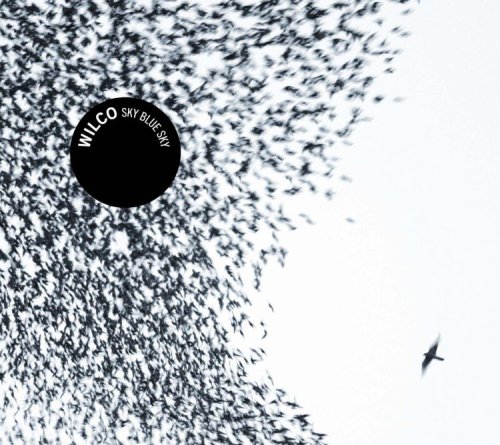
I am here listening to You Are My Face from the album “Sky Blue Sky” by Wilco.  I’m listening to the whole album, song by song,  in succession, actually.  Good on these windy city men for having sold so much of their excellently crafted musicianship from this album to VW for their recent U.S. T.V. advertising campaign.  A few hasty reviews emerged as soon as this album came out chastising these guys from the invisible electronic packing peanut gallery for, to paraphrase one one influential armchair rocker website, carrying a dad-rock gene they’ve always carried but attempted to disguise.  To surmise the band thus is offensive.  The reason that this so offensively wrong surmising of Wilco’s current album’s sound came about is myriad.

Let’s listen to me talk about it?

Yes.

DIY

Constantly-updated websites that curry to repeated page refreshes for tiny tidbits of pop knowledge for the just got to college ephemera po-po are products of a culture that can rely on truly real-time guarantees of reader impression levels for web sites.  Almost anyone can put up a website and sell advertising on it as a piggyback to the hard work put in by artists who put out something for bloggers to talk about.  The more frequently you can guarantee status-increasing informational updates to the coolerati, the more incentive they will have to visit the sites that talk about what makes them cool.  Therefore, there is more incentive for the websites that talk about music to update more frequently.  There is then more incentive to fill more positions for “journalists” to blog with less time and seasoning required by the DIY ethic to get them to pass muster.  As long as they adopt the current pop party line, they are hip and in.  As long as they believe themselves to be current and modern, yet somehow remain unable to see the points of view of others as valid, they are in.  The writer is more than likely young and very sure that his or her enthusiasm for music can be directly translated into an incontrovertibly authoritative position.  Chastising this veteran band for failing to uphold a musical style that fits within the narrowly defined boundaries of what the writer considers “experimental” is stupid.  Instead of finding the strands of the current album’s style that are carryovers from previous stylistic mutations and perhaps working to hear where the band is going with what it is doing, the writer at Pitchfork decides it’s better to publicly hate on his dad.

This is a quieter record than the past couple, but it is not a total stylistic retreat or a stark about-face for the outfit.  The clean, occasionally Thin Lizzy-esque guitar tones were first allowed to ring out on the great selection of rhythmic, hypnotic songs that comprised “A Ghost is Born”, notably as staccato bursts in Spiders.  Of course, with DIY also making the amount of music available to the niche-quarantined masses simply impossible to process meaningfully if a person is even remotely staying on top of what is coming out month to month, it’s probably not at the top of the list of priorities to sit back and listen to a slower album when you have 5 new scenester records coming out to, along with the rest of your professional brood, incorrectly apply the same references to some band that writers currently think makes them sound possessed of arcane and obscure musical knowledge.


“Sky Blue Sky” (Wilco)